
Wall Run AI Video Generator: Sprint Up a Colossal Dam Wall from One Photo
Upload one portrait and the AI casts you as the runner charging a giant concrete spillway: a crowd-lined base, a near-vertical wall sprint, a mid-air flip at the rim, and a close-up shout at the camera, all synced to the reference audio.
STUDIO WORKBENCH
By uploading, you confirm you're 18+, have permission to use this photo (no celebrities), and agree to our Terms of Service and Privacy Policy.
Watch Real Wall Run AI Videos Created with Our Generator
Watch how creators turn still photos into viral Wall Run AI videos. Tap any video to play in-place without leaving this page.
What Is Wall Run AI and Where Did the Trend Start?
The set is the star as much as the runner. A curved concrete dam rises out of frame like a stadium wall, streaked with water stains and seams, with green hills above it and a wet, reflective apron at its base. Behind the barriers, thousands of spectators fill a grandstand under white tents, pink sponsor flags snap in the wind, and a line of black-uniformed security keeps the edge clear. The camera stays wide enough to show the whole spillway, so the runner looks tiny against the scale of the structure, and that contrast is exactly what makes the clip stop a scroll.
The format did not appear from nowhere. AI stunt-running videos spread in late September 2026, with TikTok creator @stuntversehq posting giant ramp runs from September 29 and an X post from @DataChaz showing a woman sprinting a blue-green ramp on October 3. Fact-checkers at Lead Stories looked into the wave on October 9. The dam version broke out on October 23 2026, when Instagram account @jacksonzhangai posted a clip titled 'Jackson can fly'. Trend trackers recorded roughly 3.08 million likes by November 2 and more than 3.22 million by November 4. Jackson Zhang is an AI-generated persona, not a real athlete who performed the stunt.
The turnaround came when viewers started putting themselves in the frame. Around October 26 2026, TikTok creators began sharing Giant Ramp Climbing templates that swapped the original runner for a user photo. A French version from @tei6707 on October 29 drew about 741 thousand views by November 9, and an English version from @tonyehahn72 on October 30 reached about 89.5 thousand. Dam Wall Run, Giant Ramp Climbing, and Wall Run AI describe the same family of clips rather than three separate trends, and the shared format is simple: one photo in, one impossible vertical sprint out.
OnTrend AI turns that format into a one-photo workflow. Upload one portrait and the pipeline maps your face, hair, and outfit onto the runner, keeps the curved spillway, the grandstand, the pink flags, the security line, and the overcast light from the reference clip, and syncs the whole performance to the built-in audio. You get a 15-second vertical 9:16 MP4 that is ready for TikTok, Instagram Reels, or YouTube Shorts without a CapCut project, a timeline, or any editing.
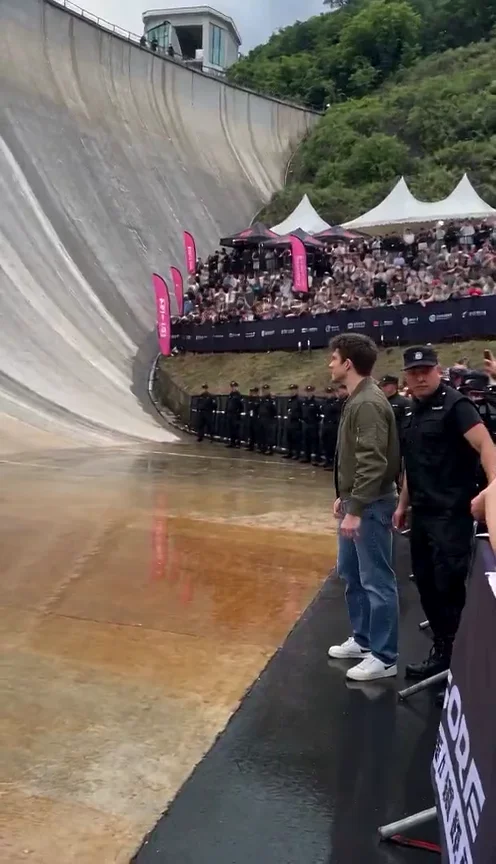
How the AI Keeps One Runner Consistent from the Base to the Close-Up
Our single-image pipeline locks your face, hair, and outfit onto the runner in the reference clip, then preserves every camera hold, wall angle, crowd detail, and lighting cue from the dam spillway.
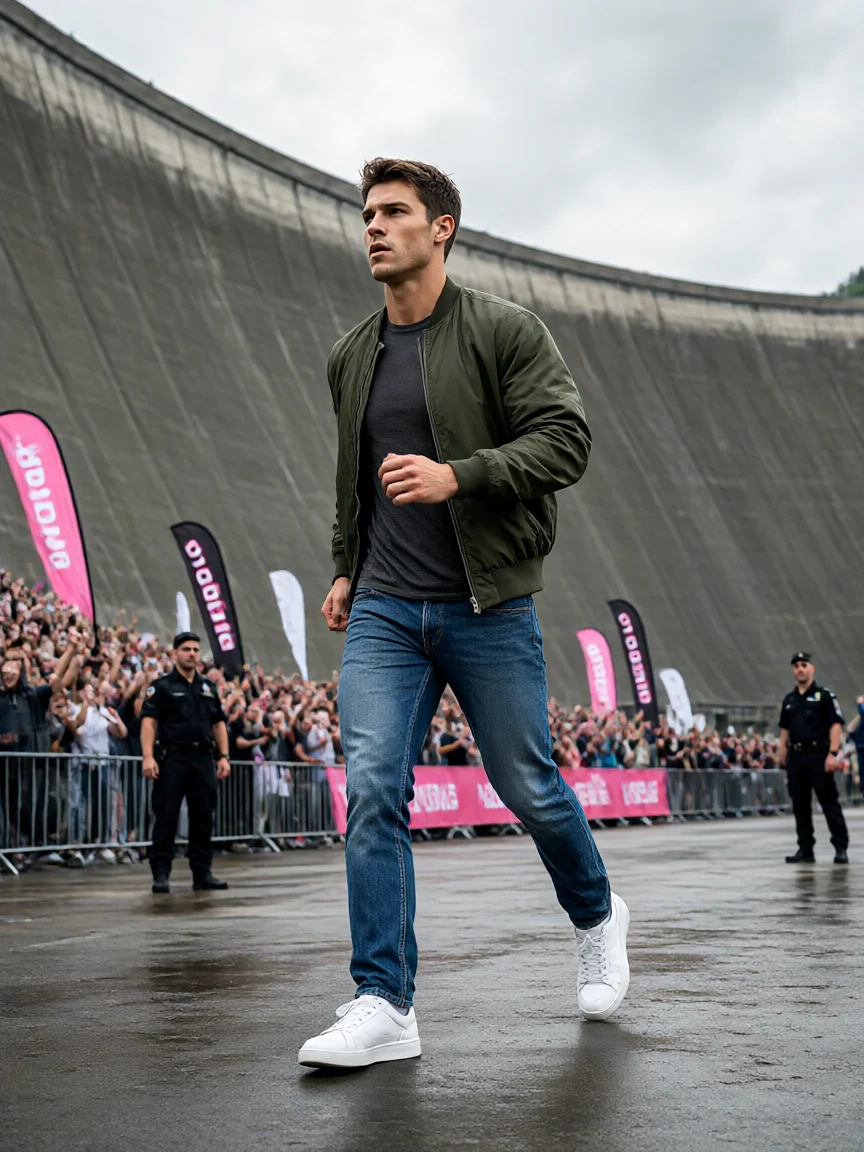
Who Can Star in Your Wall Run AI Video?
Anyone with one clear portrait can star: athletes, pets, sci-fi soldiers, or office workers. The giant spillway makes every runner look like the main event of a real stunt competition.
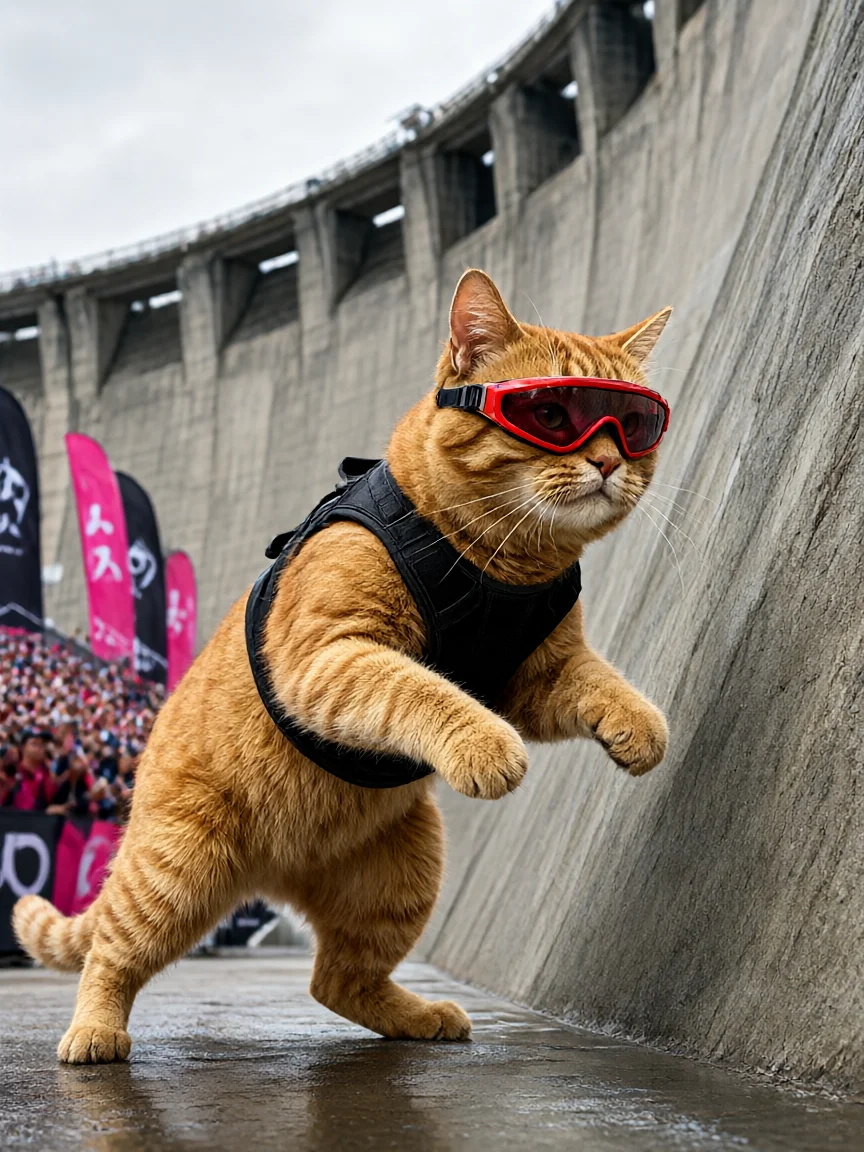
VELOCITY GINGER CAT RUNNER
Unleash the ultimate viral feline daredevil. A fearless orange tabby wearing high-tech red sports goggles and a sleek black harness, crouched in a dynamic sprinter stance at the base of the colossal dam, ready to defy gravity up the curved wall.
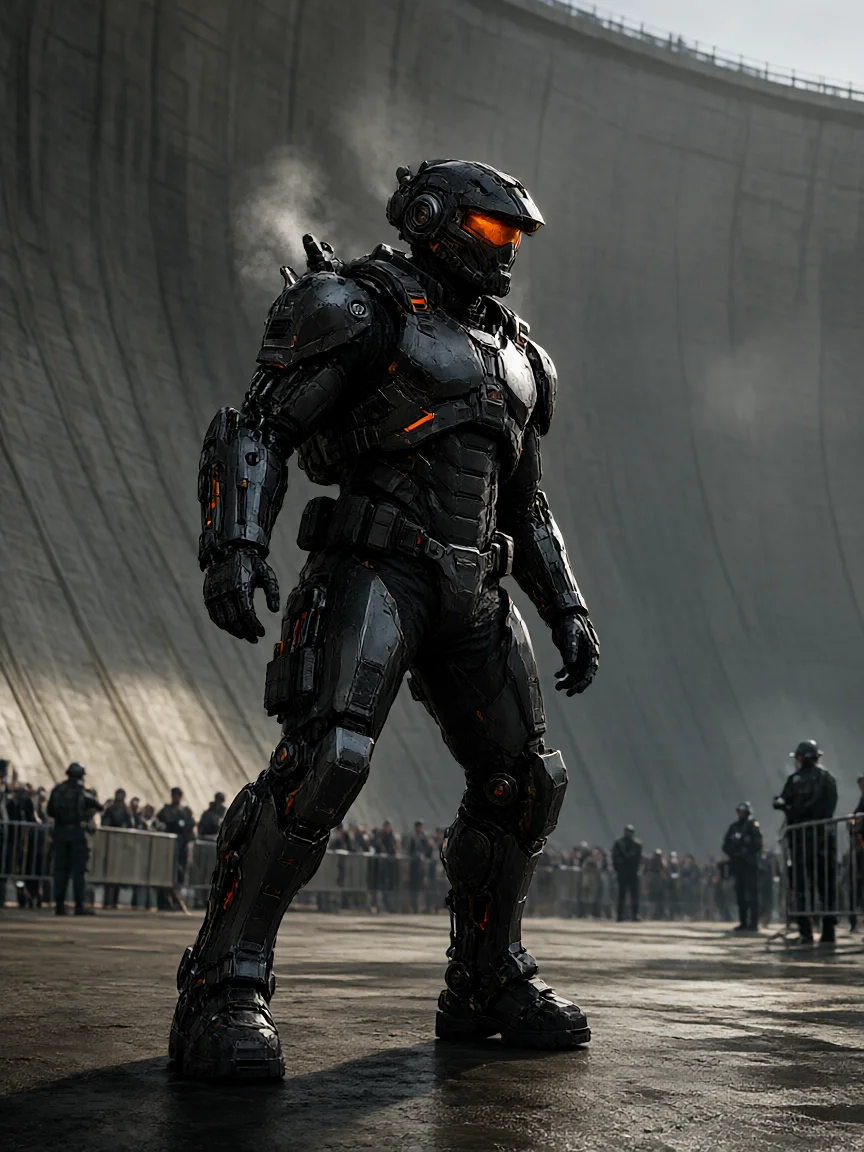
CYBERNETIC EXOSUIT JUGGERNAUT
Transform the viral athletic challenge into a blockbuster sci-fi spectacle. A futuristic special forces commando encased in matte-black and neon-orange hydraulic exoskeleton armor, boots planted firmly before the monumental concrete incline with thrusters priming for an unstoppable vertical sprint.
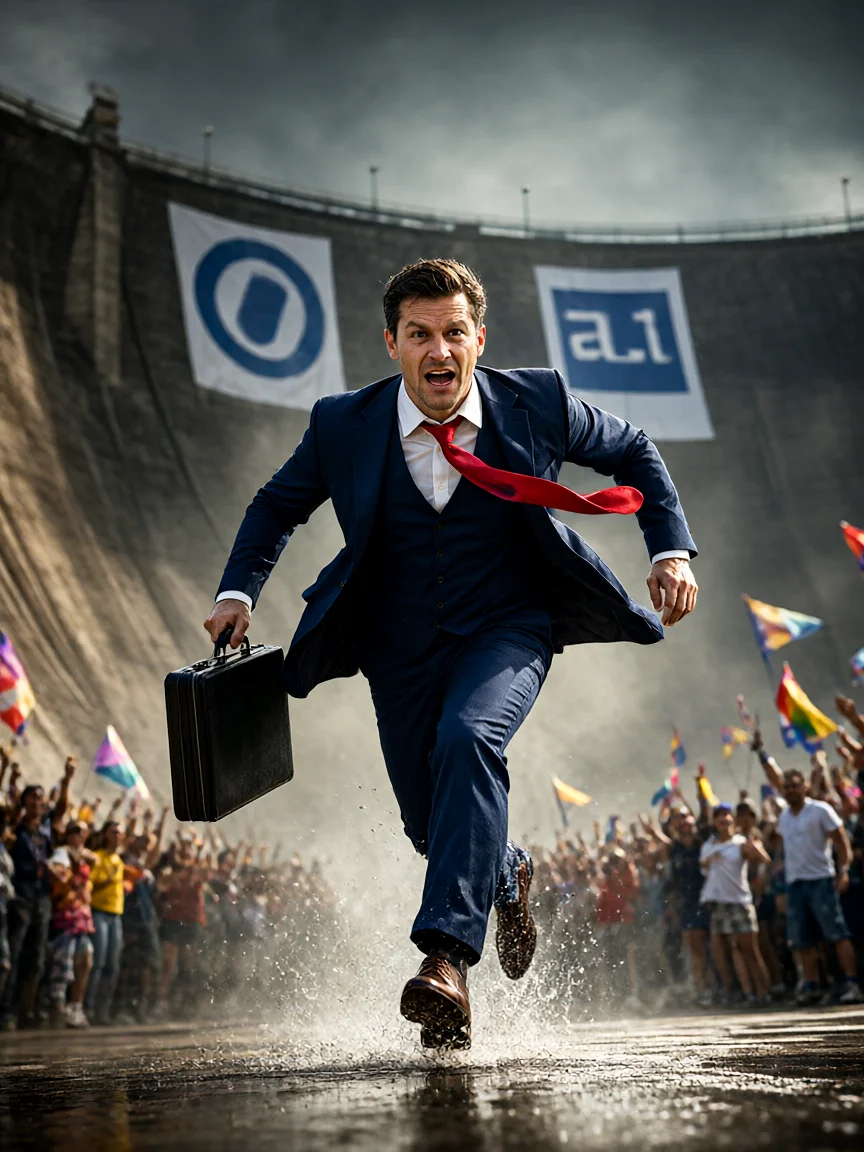
RAGING CORPORATE DESK RUNNER
Bring ultimate Monday burnout humor to viral sports. A sharply tailored business executive in a classic navy suit with a loosened red tie and leather briefcase in hand, sprinting fearlessly toward the colossal dam slope in high-shine oxfords to escape the 9-to-5 grind.
What Happens in the 15-Second Wall Run AI Video?
The 15-second clip moves through four beats: a wide establishing shot at the base of the spillway, a distant wall sprint, a flip near the rim followed by the slide down, and a tight close-up of the runner shouting at the camera.
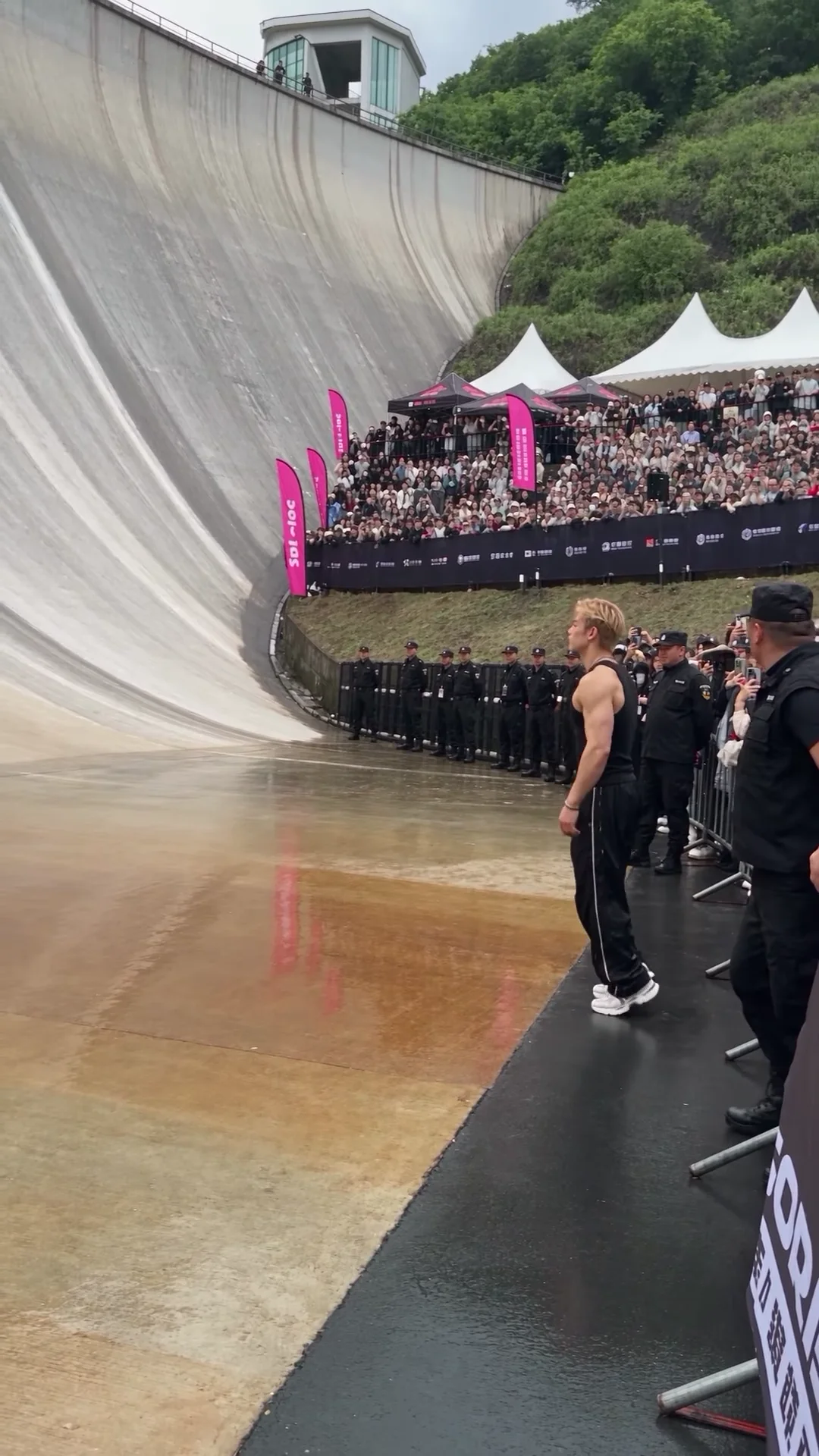
The Spillway Establishes the Scale
An extreme wide shot holds the whole curved concrete dam under an overcast sky. Thousands of spectators fill the grandstand behind barriers, pink sponsor flags and white tents line the rim, and a row of black-uniformed security stands along the wet apron. Your runner waits small in the frame at the base, then drops into a sprinter's crouch.
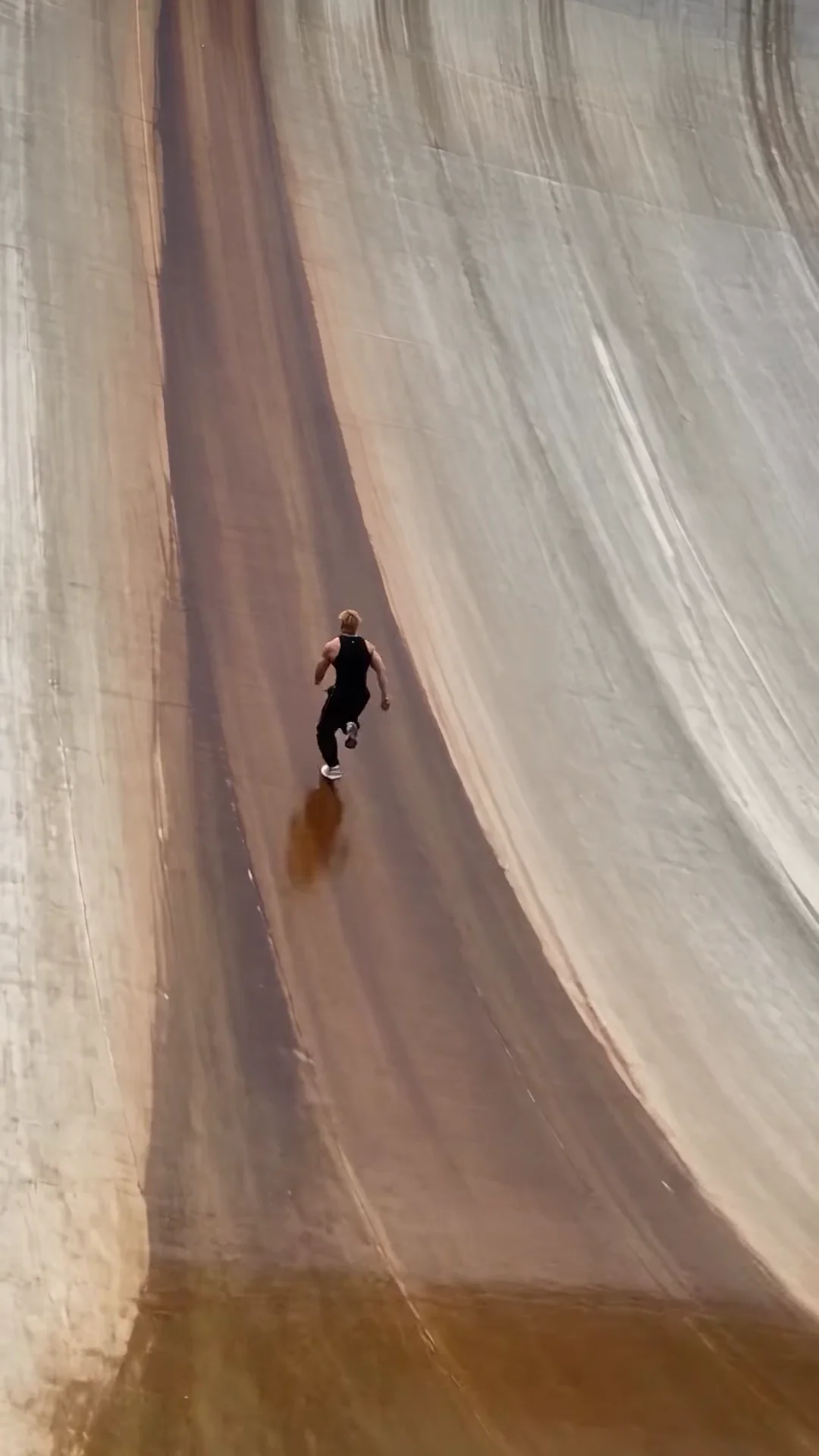
The Distant Wall Sprint
The camera stays wide as your runner charges the near-vertical concrete face. The figure remains tiny against the enormous wall, legs driving and arms pumping, climbing higher with each stride past the water stains and seams while the crowd and tents hold at the rim.
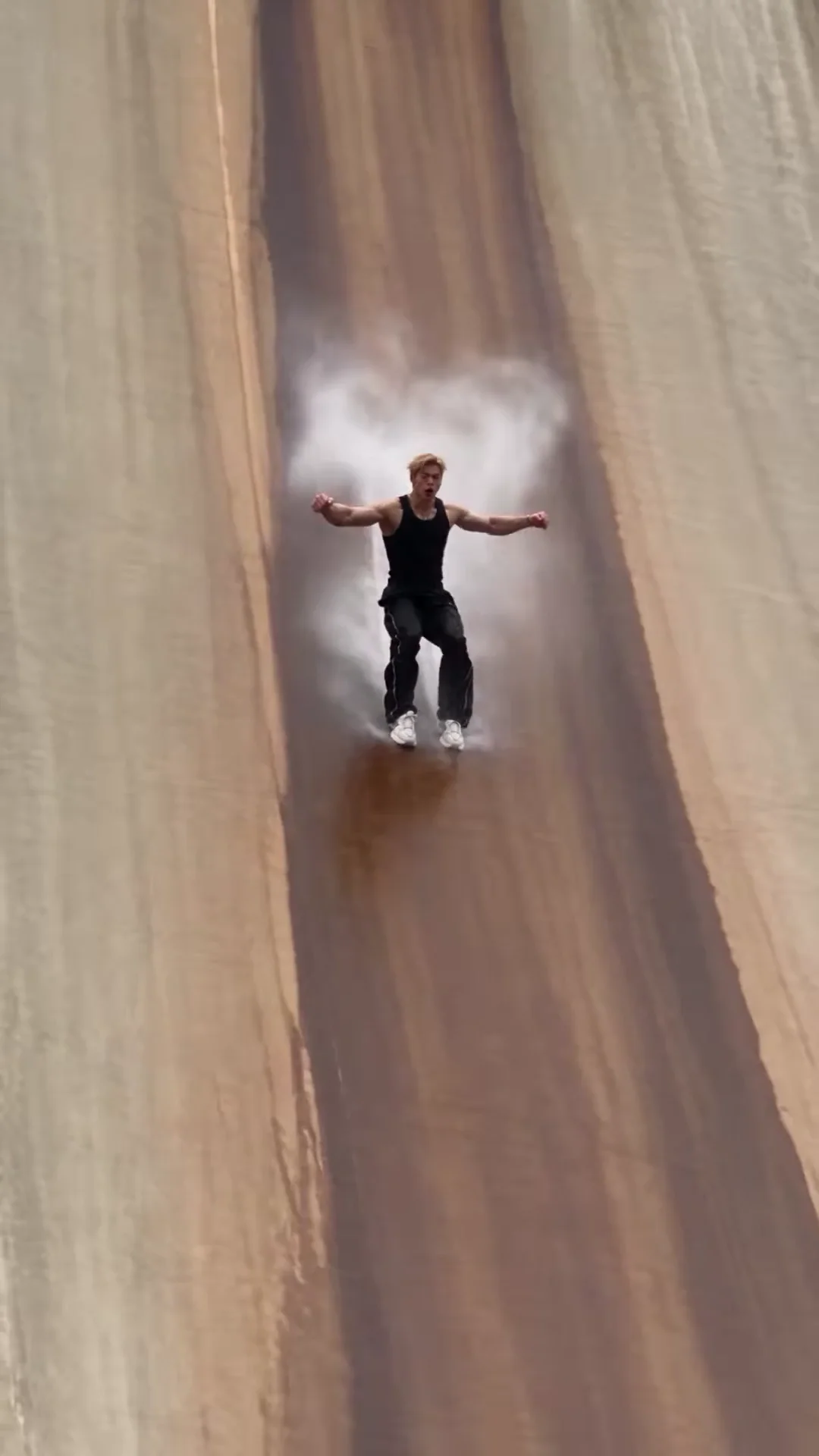
Flip at the Rim and the Slide Down
Still in a wide shot, your runner reaches the upper section and launches into a mid-air flip. The body rotates against the pale concrete, then drops into a controlled slide back down the face, skidding to a stop on the wet apron as spray kicks up around the landing.
The Close-Up Shout
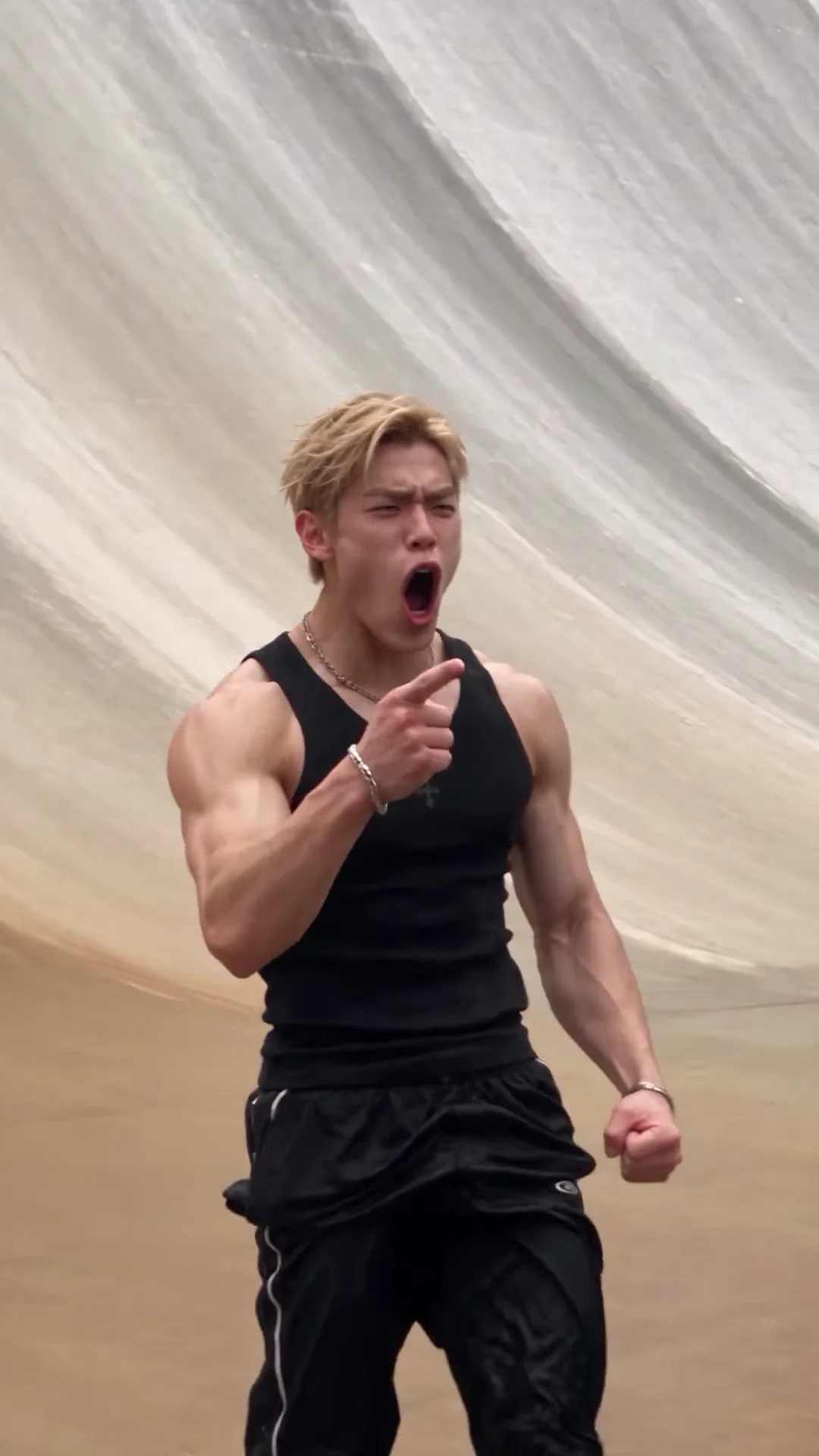
The camera finally comes in tight: your runner lands facing the lens, mouth wide open in a roar, one fist thrown and one finger pointed straight at the viewer. The clip cuts on the celebration, loop-ready for TikTok, Reels, or Shorts.
How to Make a Wall Run AI Video in 3 Simple Steps
Upload one portrait, click generate, and download your finished 15-second dam wall run video.
Upload One Portrait Photo
Pick a clear, front-facing photo of the person, pet, or character you want to cast as the runner.
Click Generate
The pipeline transfers the identity onto the reference performance, keeps the spillway, crowd, and camera work, and syncs every move to the 15-second audio.
Download and Share
Preview your 480P MP4, download it watermark-free, and post it to TikTok, Instagram Reels, or YouTube Shorts.
Best Photo Tips for a Cleaner Wall Run AI Video
Use one sharp, evenly lit, front-facing portrait so the AI can keep the runner's face and outfit locked from the wide establishing shot through the final close-up.
Recommended Best Practices
Pick a solo portrait where the face and shoulders are clear and unobstructed.
Use bright, even lighting so the eyes, nose, and mouth are easy to read.
Show the outfit you want the runner to wear, especially the jacket or top silhouette.
For pet photos, keep the face, ears, and distinctive markings in focus.
What to Avoid
Avoid blurry, low-resolution screenshots or heavily compressed images.
Do not cover the face with masks, oversized sunglasses, or raised hoods.
Avoid extreme side profiles or steep downward angles that hide facial geometry.
Avoid heavy beauty filters that erase natural facial features.
How Much Does a Wall Run AI Video Cost?
Pay only for what you generate. Credits never expire and failed generations are automatically refunded.
Starter
Makes 1× 480P standard video
Creator
Makes 1× 720P HD (or up to 3× 480P)
Studio
Makes 1× 1080P Ultra (or up to 6× 480P)
Frequently Asked Questions About Wall Run AI
Everything you need to know about pricing, music sync, video duration, and photo compatibility.
A video generation costs 45 credits.
Our flexible packs start at $6.99 for 50 credits, $12.90 for 140 credits, and $24.90 for 280 credits with no recurring monthly commitment.
Ready to Sprint Up Your Own Wall Run AI Video?
Upload one photo now and join the dam wall run taking over TikTok, Reels, and Shorts.
No credit card required to explore • Instant cloud access
Disclaimer: This service is an independent AI generative parody and meme creation tool for transformative entertainment and commentary purposes. It is not affiliated with, endorsed by, or sponsored by any artist, record label, or music publisher. All musical elements and choreography are generated under transformative fair use principles.